
Indoor Turtle Pond for the New England Exotic Animal Sanctuary
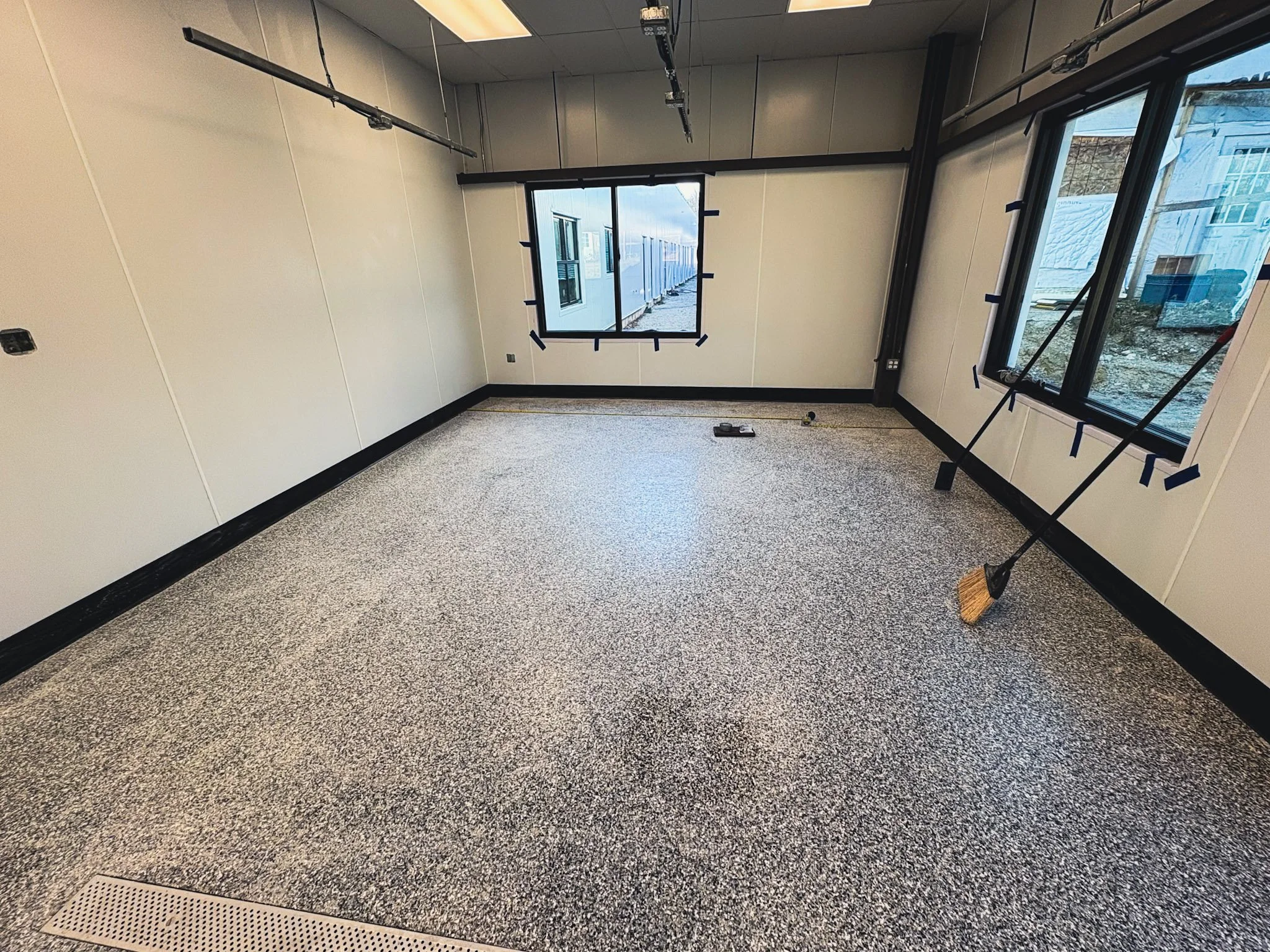
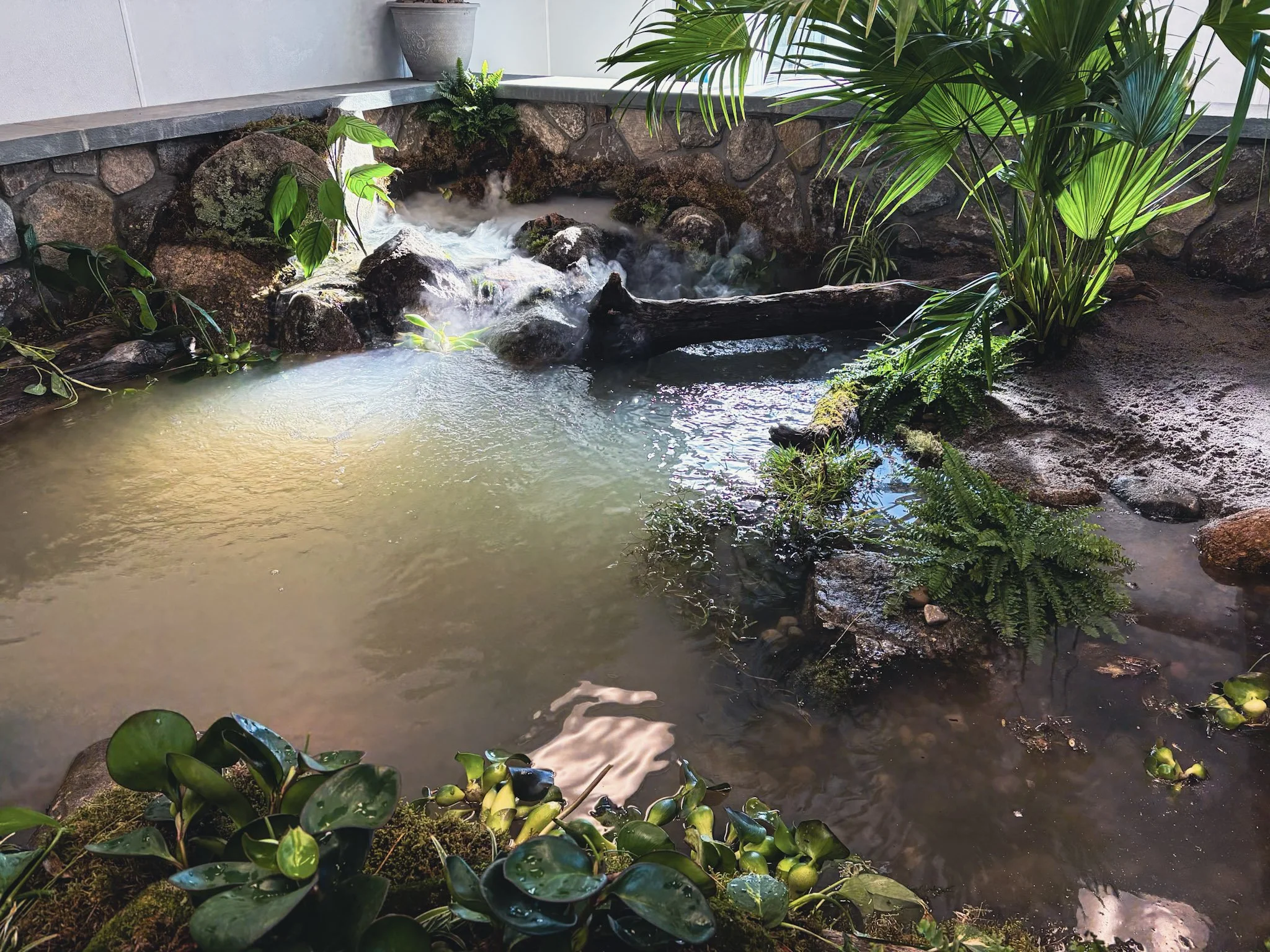
Some projects stick with you. This one is absolutely one of them.
Back in the spring of 2025, we were brought in by the team at the New England Exotic Animal Sanctuary (often known locally through their Foster Parrots work) to help build a new turtle pond for their new building! The discovery phase started with an existing indoor turtle pond that had become more of a liability than a habitat.
The challenges were real and ongoing for the staff:
Constant maintenance
Chronic water quality issues
Plumbing clogs and constant leaks
Limited enrichment for the turtles
Safety concerns around exposed equipment
In short: the system was fighting nature at every turn.
Our goal was to engineer a pond that works with nature, dramatically reduces maintenance, and gives the turtles a space that supports their full physiology—physically, behaviorally, and ecologically.
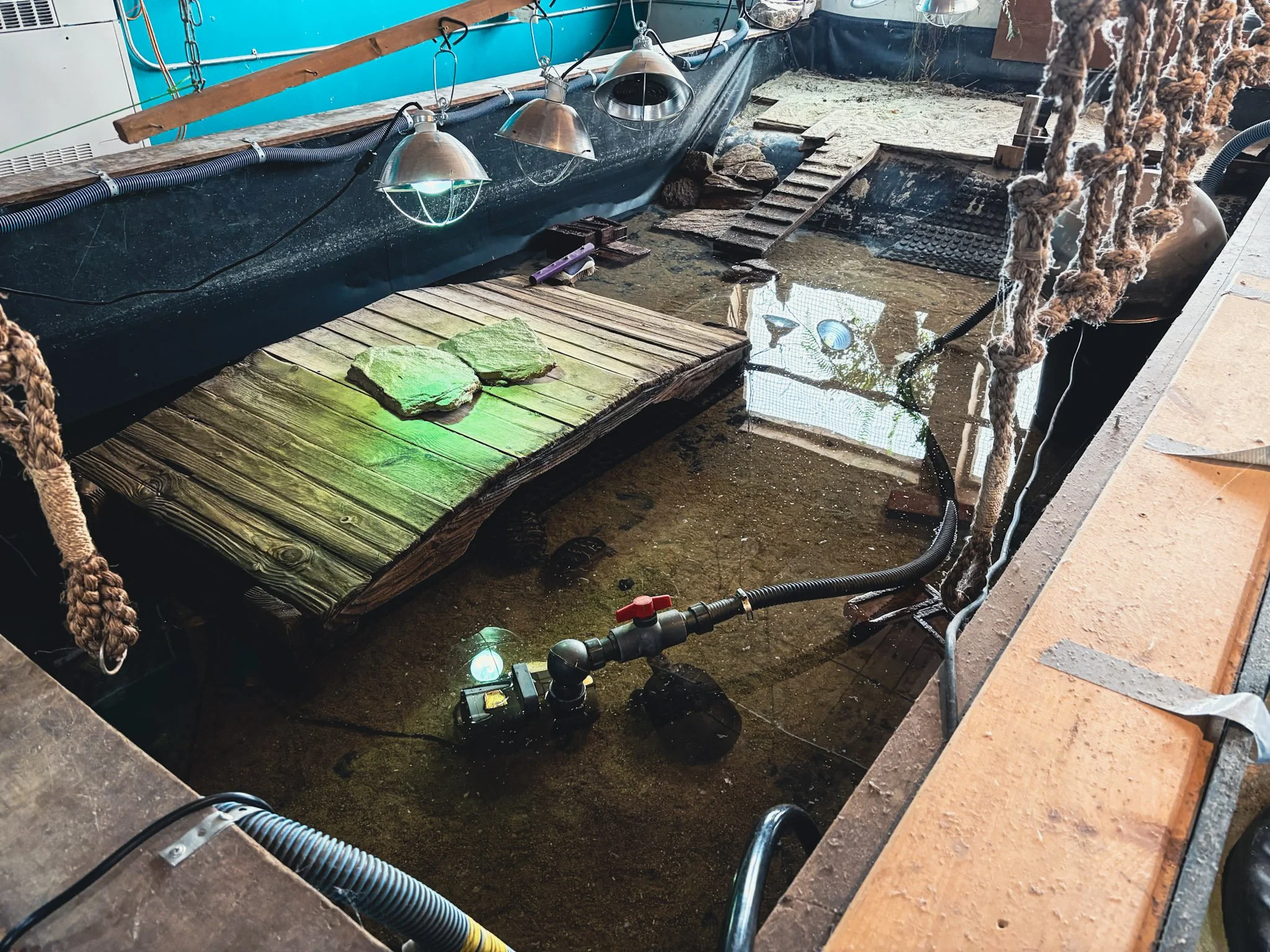
Existing turtle pond at the old Foster Parrots building. Turtles and staff patiently wait for the new building to be completed.
Designing for Function First (Aesthetics Follow)
As with all of our work, we started with engineering for long-term performance, not surface-level looks. This started with the masonary CMU wall, covered with a thinstone veneer of weathered fieldstone and bluestone cap. Installation was handled by Dower Stone, of Hopkinton, RI. A great friend and collaborator. There was radiant floor heating in the building and an epoxy floor coating. We used metal lathe to attach the CMU structure and build up from there.
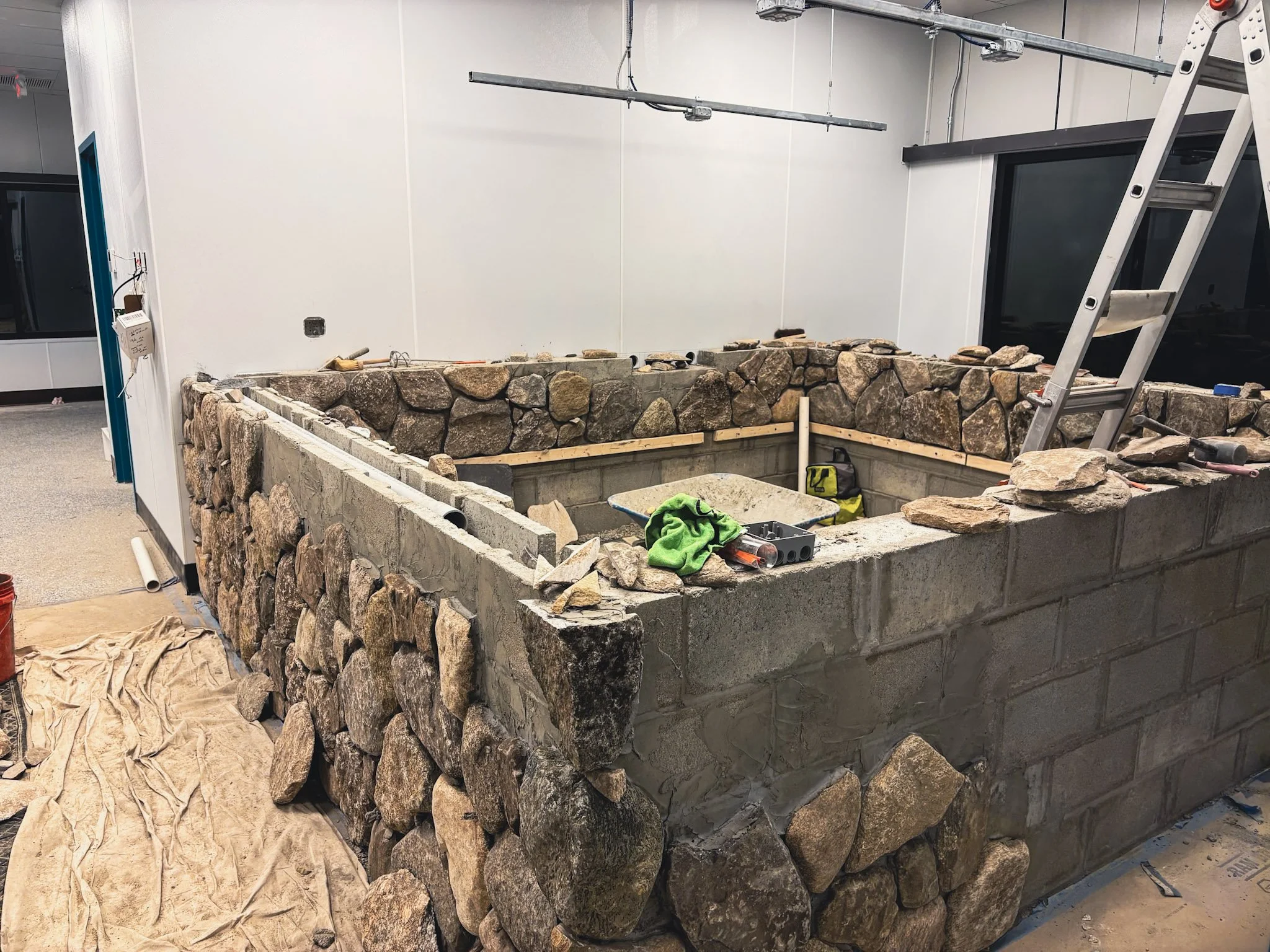
CMU wall in progress, by Dower Stone.
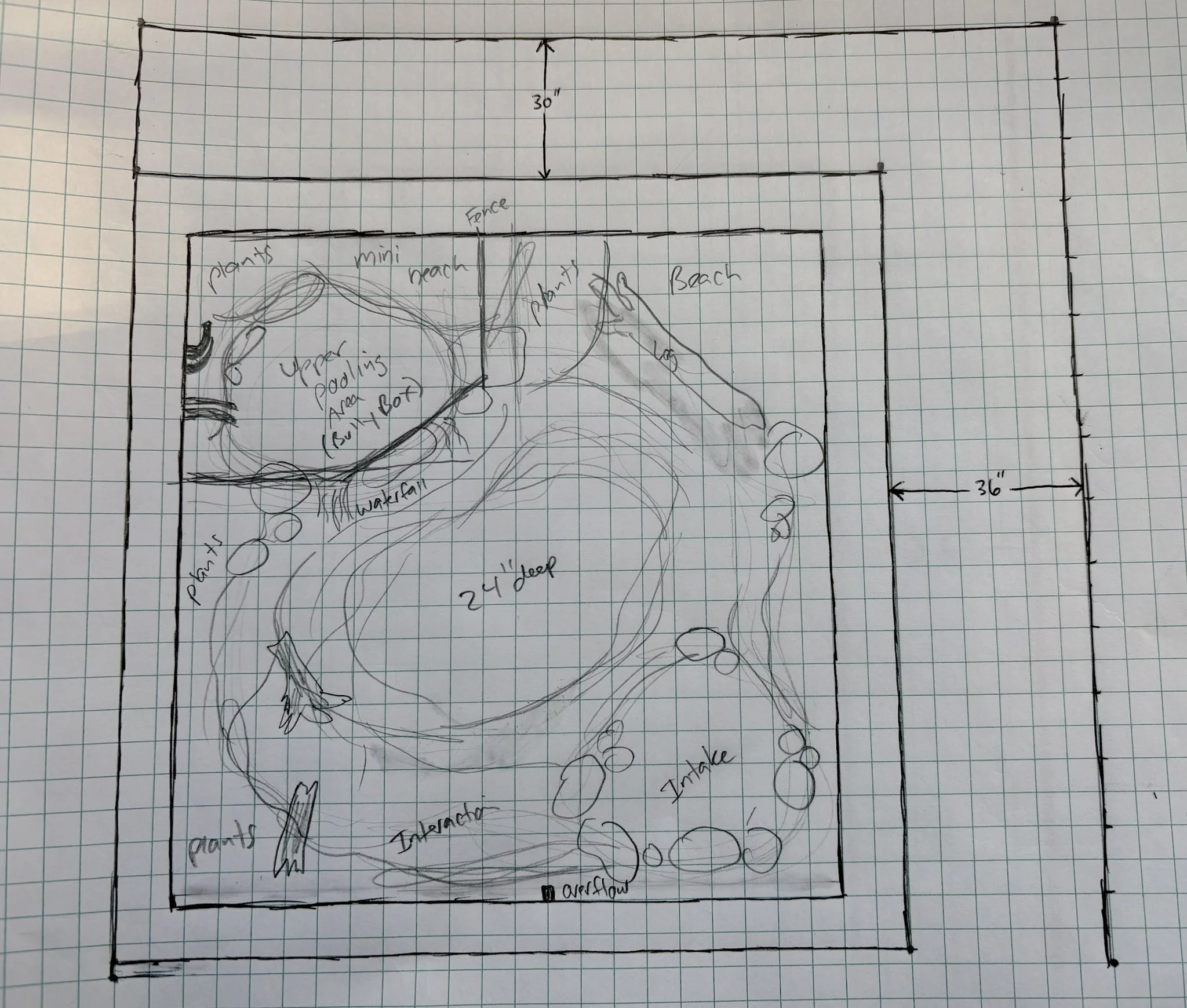
Simple sketch of pond layout.
At the core of the new pond system:
A concealed intake grid that safely draws water without risk to animals
Dual pressure filter system with built in redundancy (we don’t typically do pressure filters, but this situation was unique)
Centralized flow moving toward a skim cove, preventing debris from settling and creating nutrient issues
Robust biological filtration, utilizing rock and gravel, plants, and biological growing media.
Fully concealed plumbing and pumps—nothing exposed, nothing accessible to curious turtles
Water enters through a naturalistic waterfall, travels through the ecosystem, and is gently pulled back to one pre-filter, or skim cove. This creates predictable flow, clean water, and far fewer maintenance headaches.
Oxygen, Biology, and Stability
Healthy water starts with oxygen and biology.
To support that, we integrated:
Additional aeration, via air stones, boosting dissolved oxygen for beneficial bacteria
The waterfall itself, adding continual passive aeration and circulation
A water dosing system that provides a slow, steady “IV drip” of beneficial bacteria—supporting biological balance without chemical interventions
This approach dramatically improves clarity, odor control, and system resilience.
Habitat Diversity = Better Animal Behavior
One of the biggest shortcomings of the old pond was its bareness.
It was essentially a rectangular basin with a black liner—no depth variation, no visual breaks, and no meaningful enrichment. It had a bridge and some bricks, which better than nothing. Though, the turtles were forced into near constant line-of-sight with one another, which might have contributed to some stress and aggression.
The new pond tells a very different story.
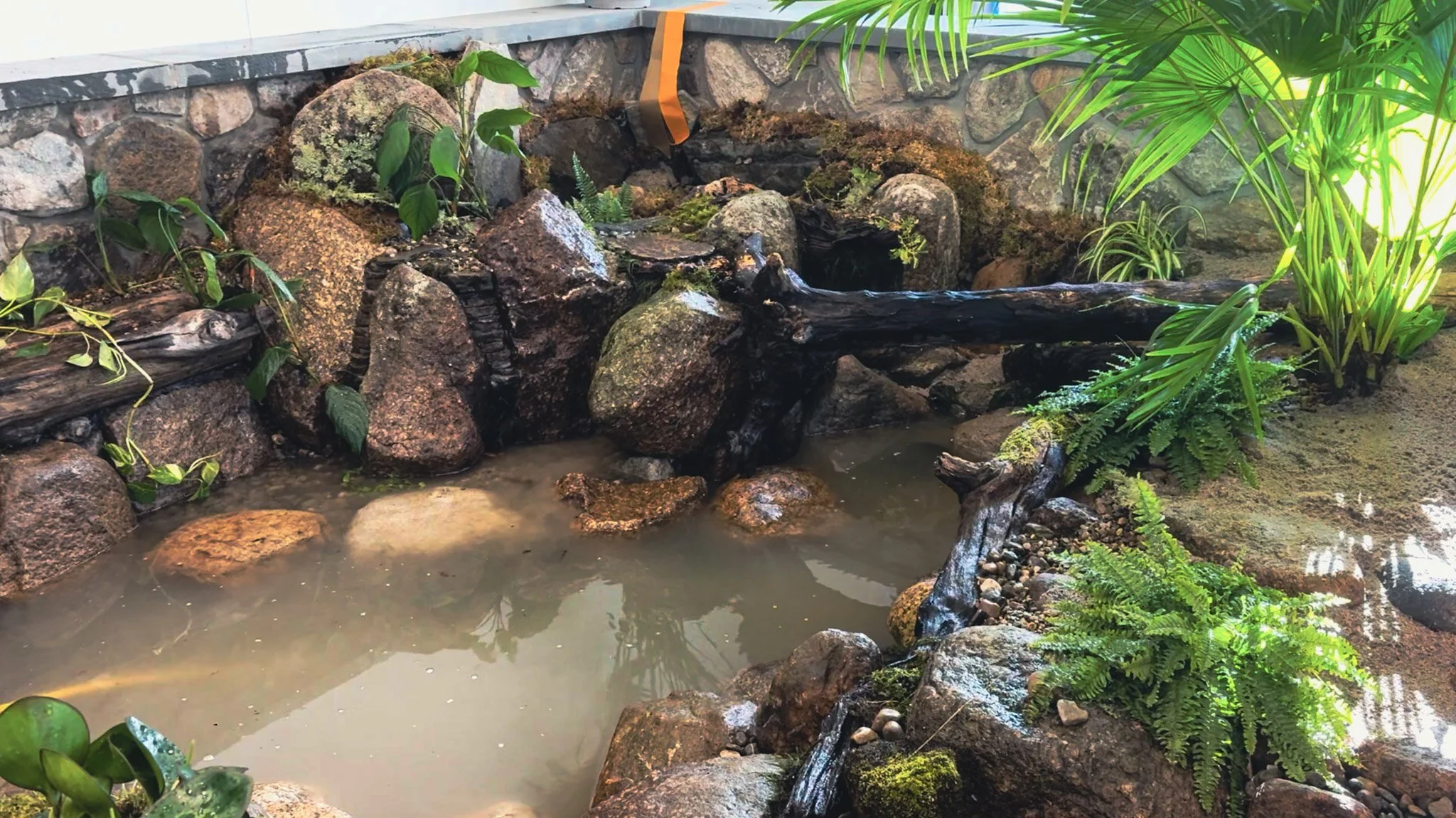
Different textures and layers visible in the pond (some of which will be underwater).
We intentionally designed variety and complexity, including:
Water depths ranging from ~22 inches to shallow 2–4 inch areas
A skim cove that doubles as a shallow exploration zone
Basking rocks and logs at multiple elevations
Stumps, driftwood, and climbing features
A traversable triple-waterfall feature which the turtles can climb
Upper pooling area
A wet beach and a dry beach for digging and egg laying
Plantings of moss, ferns, and grasses for cover, movement, and interaction
This breaks sight-lines, creates choice, and allows the turtles to swim, crawl, bask, rest, and explore—just like they would in a natural environment.
Building a Living Ecosystem (Not Just a Pond)
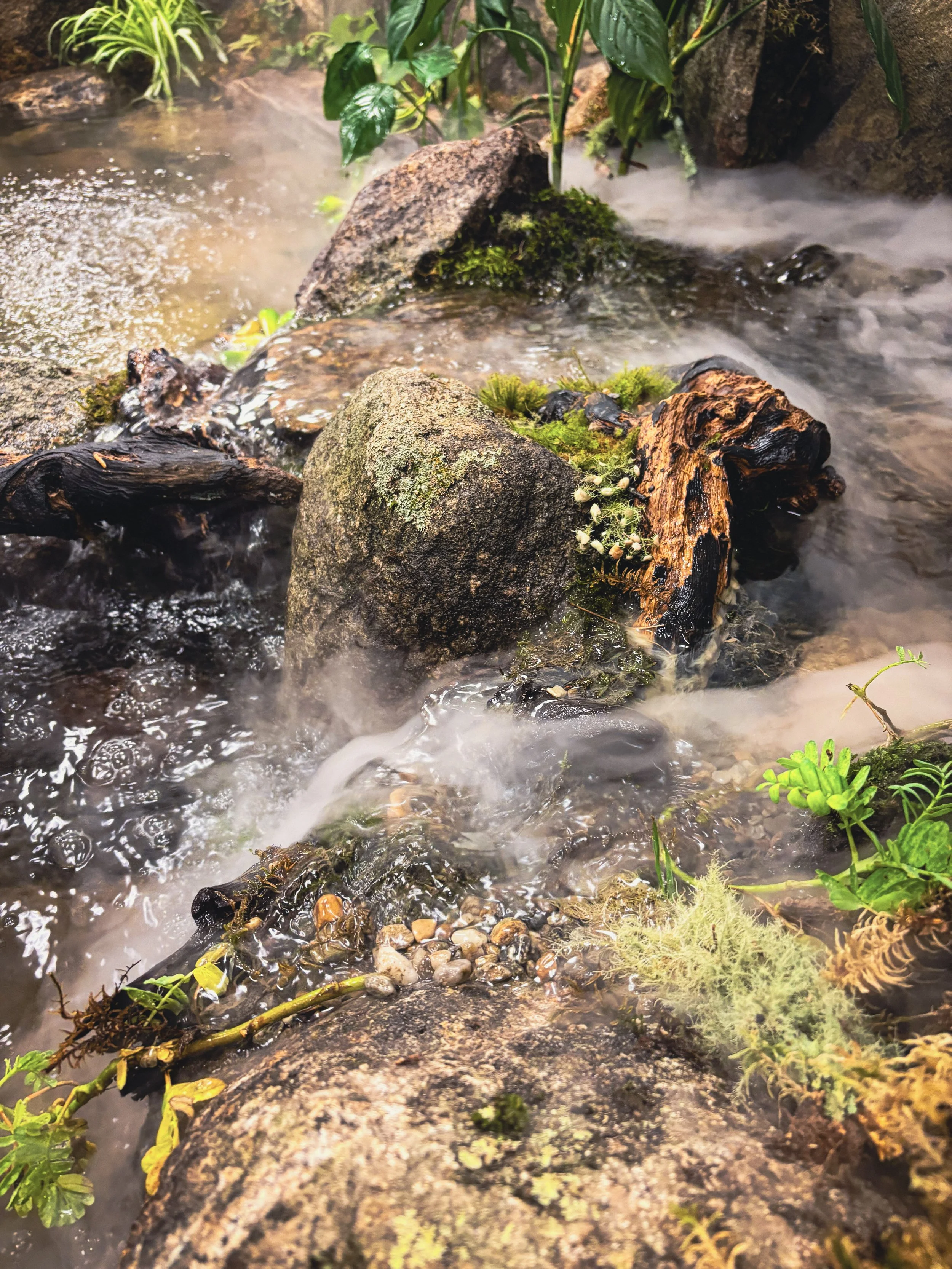
Triple split waterfall cascades around a stump into the pond.
This wasn’t just about housing turtles. It was about building an ecosystem.
We introduced a carefully selected mix of:
Minnows, mosquito fish, and zebra fish
Freshwater shrimp
Trapdoor snails
Crayfish
Freshwater scuds and marocopa eggs
These organisms form a simple but effective food web:
They consume phytoplankton, zooplankton, and detritus
They reproduce naturally
Some may become food for the turtles—and that’s okay
This dynamic system adds resilience, enrichment, and biological balance. It also allows the turtles to engage their natural hunting and foraging behaviors.
As a thank-you to the sanctuary, we gifted the full ecosystem package and planting package, recognizing the realities of space, budgets, and the importance of making the absolute most of what’s available.
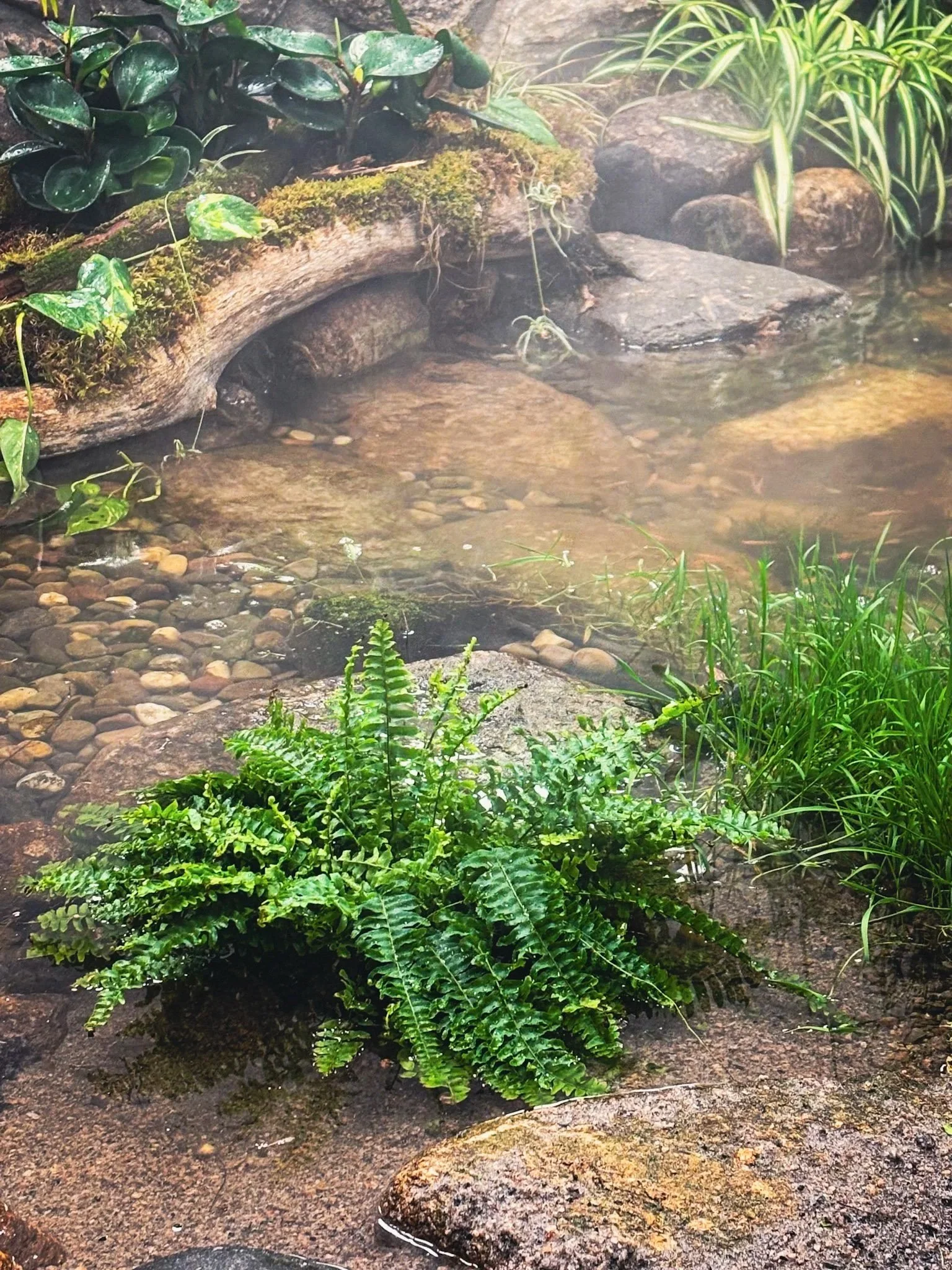
Scene of the skim cove, and wet beach.
Safety Was Non-Negotiable
Turtles are curious. Strong. Determined. And are great climbers!!
Every piece of electrical equipment, plumbing, and mechanical hardware is:
Fully concealed
Protected by stone and gravel
Inaccessible to animals
This is one of the biggest advantages of an ecosystem-based, Aquascape-style methodology—is the simplicity of the system. This allows for creativity and the flexibility to adapt for specific species. Everything has a place, and nothing dangerous is left exposed.
The Result
The transformation has been incredible.
The new pond:
Looks and feels completely different from the old system
Draws people into the space—staff and visitors alike
Has already become a place where people want to slow down, sit nearby, and simply be
We’ve been told there are plans to hang hammocks in the room just to enjoy the sound and presence of the water. That kind of feedback means everything to us!
Most importantly, we’re excited to see the turtles fully settled into their new environment—and to check back in over time as the ecosystem matures.
Why This Project Matters
This build is a perfect example of what happens when:
Engineering supports ecology
Design prioritizes animal behavior and safety
Maintenance is reduced by letting biology do the work
Even within the constraints of an indoor space and a finite footprint, it’s possible to create something that feels alive, functional, and deeply respectful of the animals it supports.
We’re grateful to the New England Exotic Animal Sanctuary for trusting us with this project—and for the work they do every day caring for animals that need a second chance.
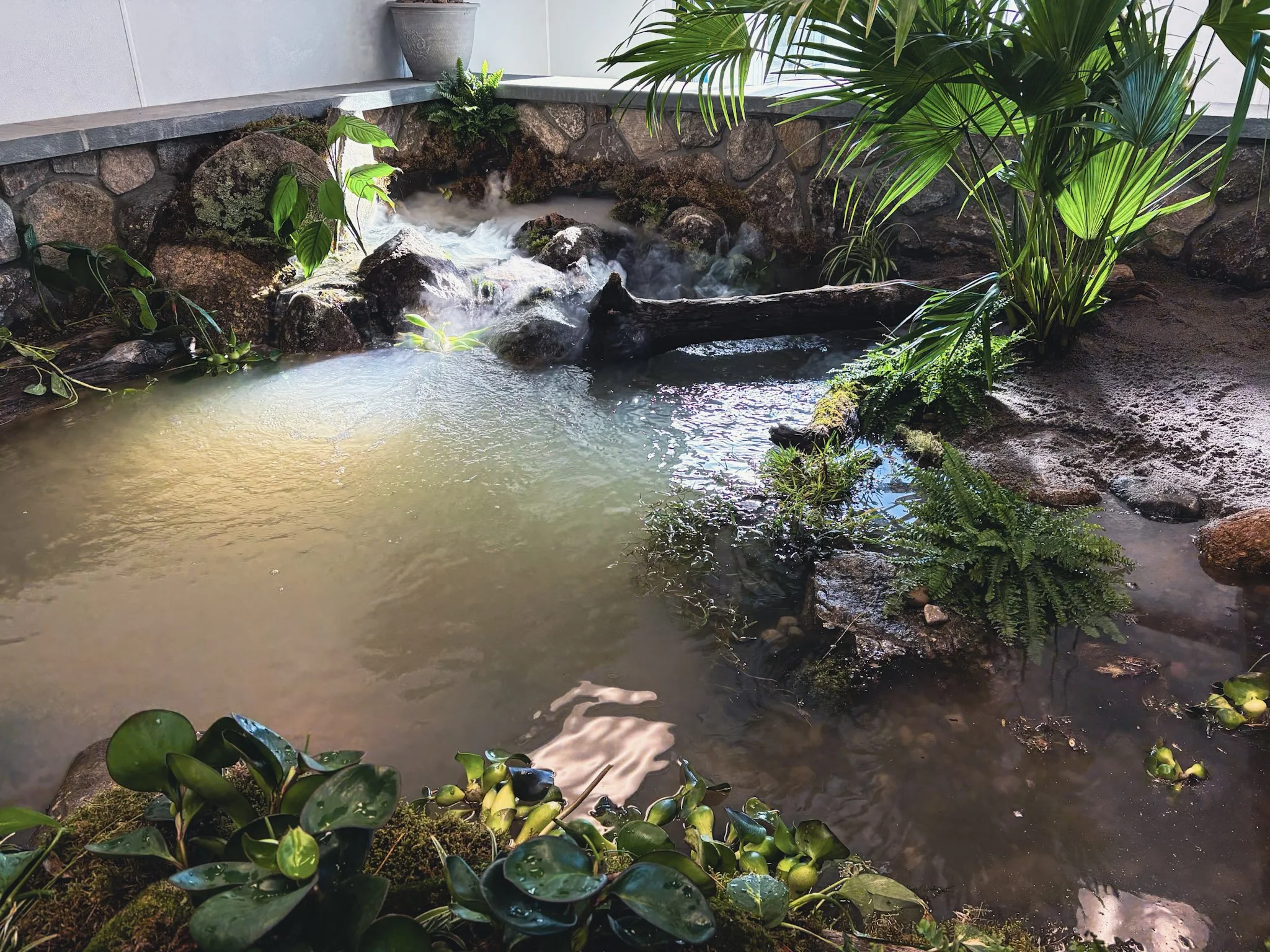
New pond just after filling with water for first time!